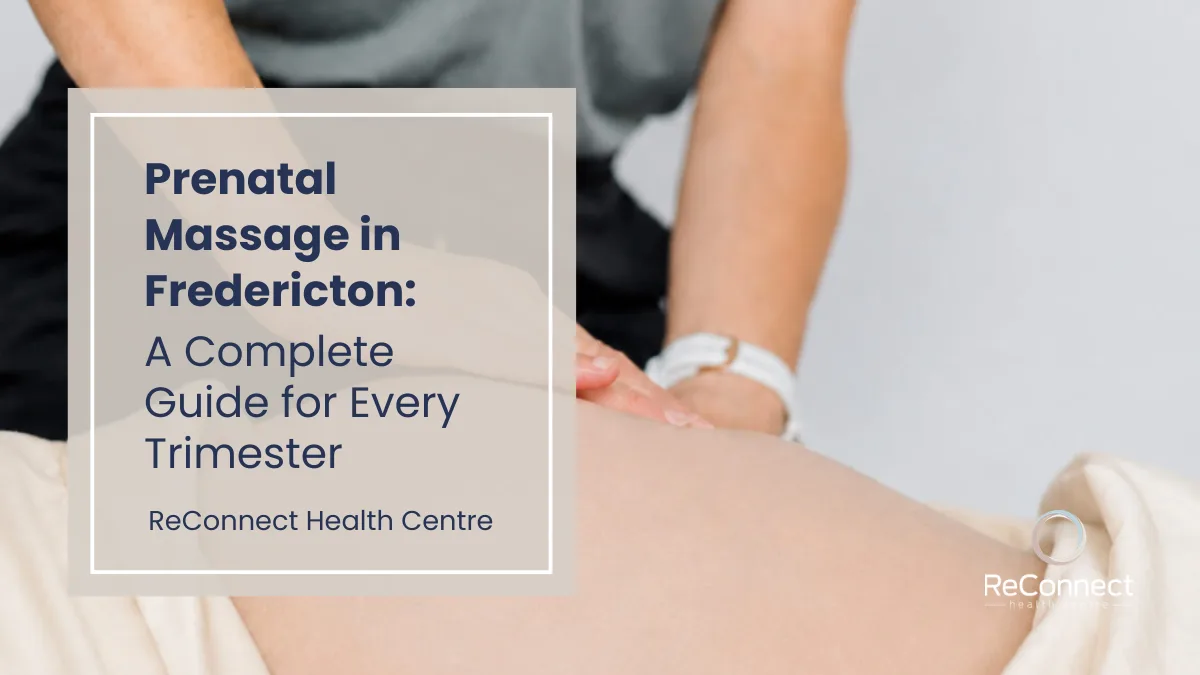
Pregnancy changes almost everything about how your body feels. The lower back tightens, the hips shift, sleep becomes elusive, and somewhere around the second trimester many people start asking the same question: is it safe to get a massage while I’m pregnant?
The short answer is yes — when it’s done by a registered massage therapist (RMT) with proper training in prenatal care. At ReConnect Health in Fredericton, prenatal massage is one of the most-booked services we offer, and for good reason. It’s one of the few therapies that can help with several of pregnancy’s most common discomforts at once: low back and hip pain, swelling, sleep difficulty, headaches, anxiety, and the general “I just don’t fit in my body anymore” feeling that shows up in the third trimester.
This guide walks through what prenatal massage is, when you can start, what each trimester looks like, who shouldn’t book one without medical clearance, and exactly what to expect at your first appointment with our team in Fredericton.
What Is Prenatal Massage?
Prenatal massage (also called pregnancy massage) is therapeutic massage adapted specifically for the pregnant body. The strokes, the positioning, the pressure, and the areas avoided are all different from a standard relaxation or deep-tissue massage.
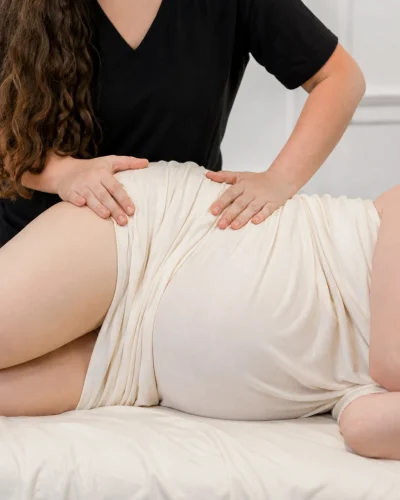
The most visible difference is positioning. From around 16 weeks onward, lying flat on your stomach isn’t comfortable or recommended, and lying flat on your back for long periods can reduce blood flow to the placenta. Our prenatal massage therapists use a side-lying position with supportive pillows under the belly, between the knees, and behind the back. This protects circulation, takes pressure off the lower back, and — honestly — is the most comfortable many pregnant clients say they’ve been all week.
Beyond positioning, prenatal massage uses lighter to moderate pressure in most areas, avoids specific points associated with uterine activity, and focuses on the regions where pregnancy puts the most strain: lower back, hips, glutes, shoulders, neck, legs, and feet.
Benefits of Prenatal Massage
The research on massage during pregnancy is encouraging. Studies have linked regular prenatal massage to reductions in stress hormones, lower rates of prenatal depression and anxiety, improved sleep, and reduced low-back and leg pain. Clinically, these are the changes our Fredericton clients tell us about most often:
- Lower back and pelvic pain relief. As the uterus grows and the centre of gravity shifts, the lumbar spine and sacroiliac joints take on extra load. Targeted massage of the glutes, hip rotators, and lumbar region often brings noticeable relief.
- Better sleep. Many clients report falling asleep faster and waking less the night of their massage. The combination of nervous system downregulation and reduced muscle tension makes a real difference, especially in the third trimester.
- Reduced swelling in the legs and feet. Gentle techniques can help move fluid that pools as pregnancy progresses, particularly when you’ve been on your feet or in the heat of a New Brunswick summer.
- Lower stress and anxiety. Massage helps shift the nervous system into a parasympathetic (“rest and digest”) state. For clients dealing with prenatal anxiety, this hour can feel like the only true off-switch in the week.
- Headache and neck tension relief. Pregnancy posture changes — the forward head, the rounded shoulders, the arched lower back — create predictable tension patterns. Working those areas often resolves the dull headaches that tend to creep in.
- Preparation for labour and recovery. Regular massage in the third trimester can help maintain mobility in the hips and pelvis and keeps the nervous system regulated heading into labour.
When Can You Start Prenatal Massage?
Most healthy pregnancies can include massage at any point, including the first trimester. There’s a long-standing internet rumour that massage in the first trimester causes miscarriage. There is no good evidence to support that, and our therapists are trained to adapt the treatment for early pregnancy.
That said, if you have a high-risk pregnancy, a history of preterm labour, complications like preeclampsia, or your healthcare provider has placed any restrictions on activity, please check in with them before booking. We’d rather you have a quick conversation with your midwife, OB, or family doctor than skip the question.
Prenatal Massage by Trimester
First Trimester (Weeks 1–12)
First-trimester massage tends to be gentle and focused on relaxation, nausea management, and tension in the upper body. Many clients book for stress relief and headache management during these weeks. You can lie on your back or in a side-lying position; the belly isn’t large enough yet to require special support.
Second Trimester (Weeks 13–27)
This is often the “sweet spot” trimester. Energy returns, nausea fades for most people, and the body starts asking for real bodywork as it changes shape. We’ll typically transition to side-lying positioning during this trimester, and we focus on the lower back, hips, and glutes as the pelvis begins to widen.
Third Trimester (Weeks 28–40+)
The third trimester is where prenatal massage tends to feel essential rather than optional. Common third-trimester complaints — sciatica, round ligament pain, swollen legs, restless sleep, rib pain, sacroiliac discomfort — all respond well to skilled hands. We use full side-lying positioning with pillow support, and many clients book weekly or biweekly through to delivery.
Is Prenatal Massage Safe? Conditions to Discuss with Your Provider
Prenatal massage is safe for the vast majority of healthy pregnancies. There are some situations where we’ll ask for clearance from your healthcare provider before booking, or where massage may not be appropriate at certain stages. These include:
- High-risk pregnancy or any threatened miscarriage
- Severe preeclampsia or pregnancy-induced hypertension
- History of preterm labour or placenta previa
- Deep vein thrombosis (DVT) or significant clotting disorders
- Severe swelling, severe headaches, or visual changes (these need medical assessment, not massage)
- Recent vaginal bleeding
If any of these apply, it doesn’t necessarily mean massage is off the table — it just means we’ll work with your care team to make sure the timing and approach are right.
What to Expect at Your First Prenatal Massage Appointment
Your first appointment at our Fredericton clinic on Regent Street takes a little longer than a regular massage because we want to understand your full pregnancy picture. Here’s what to expect:
- Health intake. Your RMT will ask about how far along you are, how the pregnancy has been going, any complications, your previous birth history if relevant, current symptoms, and what you’d like to focus on.
- Treatment goals. We’ll talk through what bothers you most — back pain, swelling, sleep, headaches, anxiety — and build the session around that.
- Positioning setup. Once you’re on the table, we use bolsters and pillows to set up a comfortable side-lying or semi-reclined position. You stay covered (draped) throughout, with only the area being worked on exposed.
- The massage itself. Most prenatal sessions are 60 or 90 minutes. Pressure is moderated for pregnancy, and we’ll check in throughout to make sure you’re comfortable and getting what you need.
- Aftercare. We’ll suggest gentle stretches, hydration, and any home strategies that fit your specific situation.
Meet Your Prenatal Massage Therapists in Fredericton
Two of our Fredericton RMTs have additional training specifically in prenatal and pregnancy massage:
Courtney Mollins-Bidlake, RMT
Courtney brings a rare depth of perinatal experience to the table. In addition to her RMT training, she has over a decade of experience as a birth doula, and is trained in infant massage and craniosacral therapy. That means she understands pregnancy not just from a tissue and biomechanics perspective, but from the lived emotional and physical reality of supporting people through labour and the early postpartum weeks. Many of her clients continue with her for postpartum massage and bring their babies in for infant massage instruction afterward.
Janna Boucher, RMT
Janna has additional training in prenatal and pregnancy massage and works extensively with clients across all three trimesters. Her treatments are thoughtful, evidence-informed, and adapted carefully to each stage of pregnancy. Clients consistently describe her work as a combination of skilled hands and a calm, grounded presence — exactly what you want when your body is doing something this big.
Both Courtney and Janna are registered with the College of Massage Therapists of New Brunswick and their services are eligible for direct billing through most extended health plans.
Postpartum Massage: The Often-Forgotten Half
One last note. Pregnancy massage gets the spotlight, but postpartum massage is just as important — arguably more so. Recovery from birth, breastfeeding posture, sleep deprivation, and the emotional load of the fourth trimester all show up in the body. We typically recommend booking your first postpartum massage between 2 and 6 weeks after delivery, depending on your birth experience and how recovery is going. If you delivered by C-section, we’ll wait a little longer and avoid the incision area until it’s fully healed.
Frequently Asked Questions About Prenatal Massage in Fredericton
Do I need a doctor’s referral for prenatal massage in New Brunswick?
No. You can book directly with a registered massage therapist in New Brunswick without a referral. Some extended health plans require a referral for reimbursement — check with your insurer if you’re planning to claim the visit.
How early in pregnancy can I get a massage?
You can book a prenatal massage at any point in pregnancy, including the first trimester, as long as you have an uncomplicated pregnancy. If you’re at all unsure, check with your midwife, OB, or family doctor first.
Is prenatal massage safe in the first trimester?
For most healthy pregnancies, yes. The idea that first-trimester massage causes miscarriage isn’t supported by evidence. We do adapt the treatment for early pregnancy and avoid certain pressure points as a precaution.
How will I be positioned during a prenatal massage?
From around 16 weeks onward, we use a side-lying position with bolsters and pillows supporting your belly, knees, and back. It’s often the most comfortable position our pregnant clients have been in all week. Earlier in pregnancy, you may lie on your back with a slight tilt or face down with a pregnancy cushion, depending on your comfort.
How long is a prenatal massage appointment?
Most appointments are 60 or 90 minutes. The 60-minute option works well for symptom-focused treatment; 90 minutes is ideal in the third trimester or when you want a more thorough head-to-toe session.
How often should I book prenatal massage?
It depends on your symptoms and budget. Many clients come once a month through the first and second trimesters, then move to every two weeks (or weekly) in the third trimester. There’s no single right answer — we’ll help you figure out a rhythm that works.
Will prenatal massage induce labour?
Standard prenatal massage will not induce labour. There are specific acupressure points associated with labour induction that we’re trained to avoid until you’re past your due date. If you’re full-term and asking us to use those techniques specifically, we can discuss that with you and your care team.
Is prenatal massage covered by insurance in New Brunswick?
Most extended health plans that cover RMT services also cover prenatal massage, since it’s performed by a registered massage therapist. Coverage amounts and per-visit limits vary by plan. We offer direct billing to most major insurers in Fredericton.
Book a Prenatal Massage in Fredericton
If you’re ready to book, you can book online with Courtney or Janna at our Fredericton clinic on Regent Street. If you’re unsure whether prenatal massage is right for you at this stage, send us a message and we’ll help you figure out the best fit — whether that’s massage, pelvic floor physiotherapy, or another part of our women’s health team.
Your body is doing the most demanding work it will ever do. You don’t have to white-knuckle your way through it.